
Why a Simulation Score Isn’t the Full Story
A simulation score tells you what a learner did. It doesn’t always tell you why they did it.
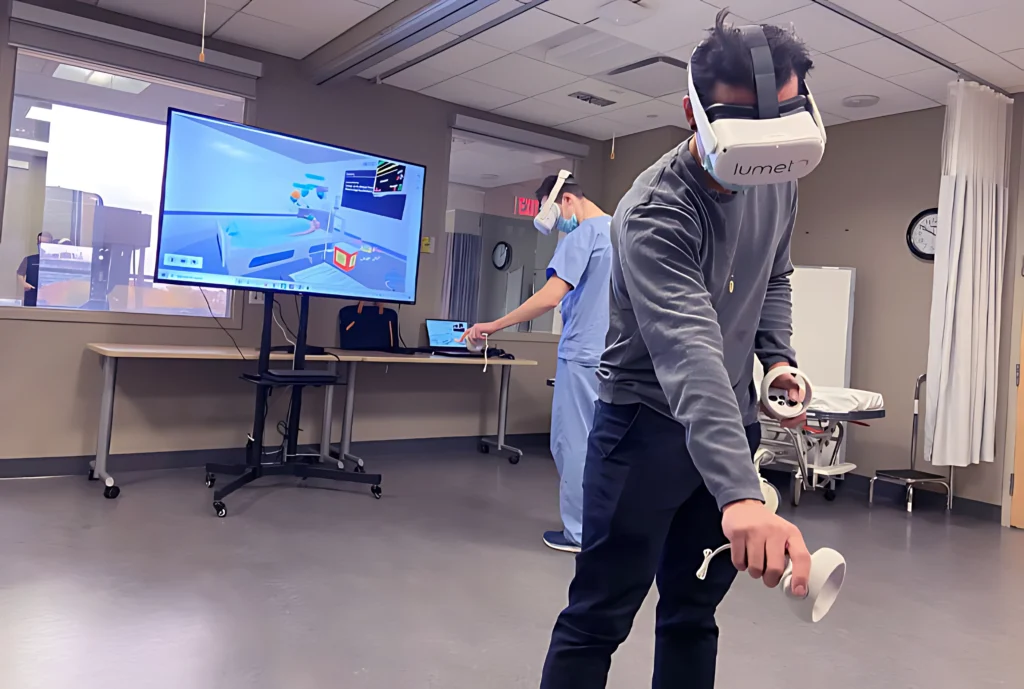
A learner can pass a scenario and you still may not know the things that matter most. What did they assess first? What did they miss? Where did they hesitate? Which decision changed the outcome?
A score on its own cannot show the thinking behind the performance.
Simulation tools have always captured outcomes. What educators continue to look for is a clearer view of the decisions and behaviors behind them.
Programs are starting to address this by adding analytics that review session data after the experience. That can be useful. Educators can identify patterns across learners, see where groups are struggling, and use those insights to guide debrief conversations.
But there is a difference between data that explains what happened and assessment that responds to it as it happens.
A well-designed simulation environment captures more than the final result. It can show the order of a learner’s actions, when decisions were made, and where they changed direction. Educators can define assessment criteria that identify safe and unsafe practices during the scenario. Conversation data can reveal how learners communicate with patients and care teams, not just the clinical actions they take. Replay tools allow educators to return to specific moments and discuss what happened, rather than relying only on what the learner remembers.
Together, these capabilities create something more valuable than a report after the simulation. They create a stronger foundation for the debrief itself.
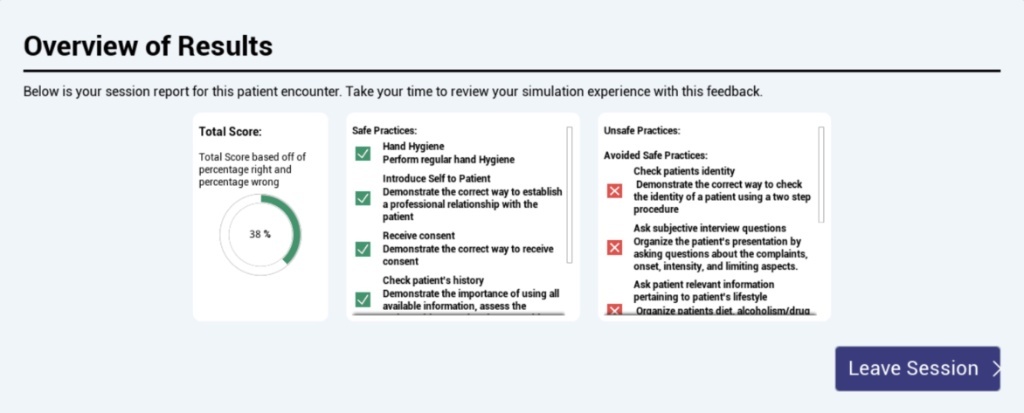
When feedback is connected to the learner’s actual decisions, the conversation becomes more specific. Instead of reviewing a general outcome, educators can explore the moment a decision was made, why it mattered, and what the learner might do differently next time.
This becomes especially important with self-directed simulation. When learners complete scenarios independently, there is no facilitator observing every step and building the debrief afterward. The feedback needs to be part of the learning experience itself.
If simulation is going to become a regular part of clinical education, not just an occasional activity, a score at the end is not enough. Programs need insight into how learners approach decisions, respond to challenges, and develop clinical judgment.
A learner’s score tells you where they ended up. The value comes from understanding the path they took to get there.