
7 Ways Multimodal Immersive Learning Can Transform Prelicensure Nursing Education
There is a familiar problem in nursing education: students need more experience before they can be trusted with more experience.
They need to recognize deterioration before seeing it for the first time at the bedside. They need to learn how to speak with an anxious parent, de-escalate a frustrated patient and make decisions when several things are going wrong at once. And they need enough repetition for those skills to become something more durable than knowledge recalled for an exam.
But clinical placements are finite. Simulation labs are busy. Standardized patients are expensive and difficult to schedule. Faculty time may be the scarcest resource of all.
This is where multimodal immersive learning becomes interesting.
Instead of treating simulation as something that happens only in a lab, programs can create a continuum: screen-based practice at home, immersive VR on campus, standardized patients for human interaction, and clinical placements for real-world application.
The goal isn’t to replace any of these experiences. It is to make each one work harder.
Here are seven ways prelicensure nursing programs can do it.
1. Turn the laptop into an extension of the simulation lab
The most obvious place to expand simulation may be the place students already spend a lot of time: their laptops.
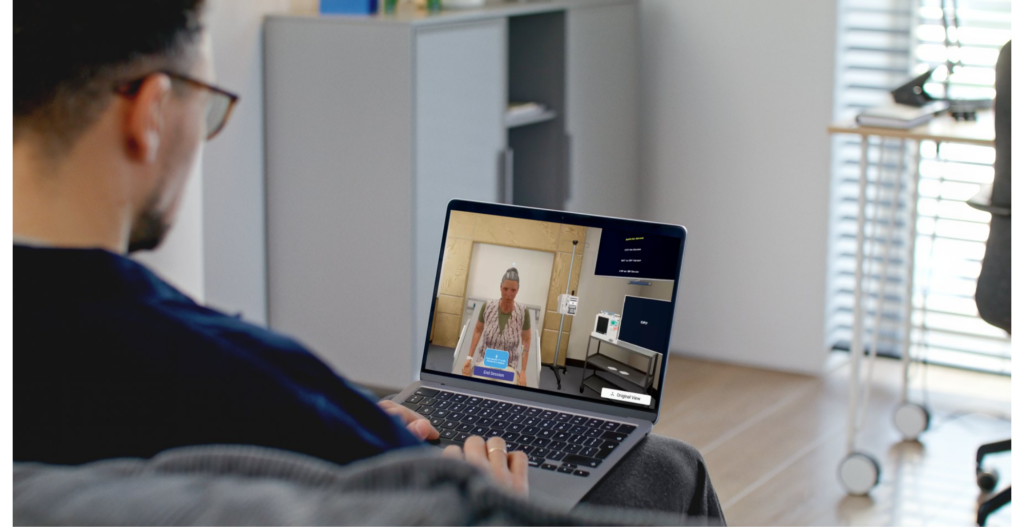
A student preparing for a respiratory simulation could first complete a screen-based case from home. They enter the patient’s room, review information, conduct an assessment, talk with an AI-enabled patient and decide what to do next. Then they arrive in the physical lab already familiar with the case’s underlying clinical concepts.
The same model can work after class. A student who struggled with prioritization doesn’t necessarily need to wait until the next open lab session. They can practice another scenario that evening.
There is evidence for this kind of approach. A systematic review and meta-analysis of 12 randomized controlled trials found that virtual simulation significantly improved clinical reasoning, with particularly promising results from multiple scenarios, patient-management content and post-scenario feedback. Interestingly, the researchers also identified benefits associated with non-immersive virtual experiences, making the case that effective virtual simulation does not always require a headset.
The result is a subtle but important shift: simulation becomes something students can practice, not merely something they attend.
2. Give communication skills the repetition they deserve
Nursing is full of conversations that are difficult to learn from a textbook.
How do you reassure someone who is frightened without making promises you cannot keep? Explain a medication to a skeptical patient? Speak with a distressed family member while still completing an assessment? Ask sensitive questions without sounding mechanical?
These are skills built through practice.
AI-enabled virtual patients can give students a surprisingly useful rehearsal room. Learners can interview patients, gather histories, practice therapeutic communication and navigate emotionally complex encounters without worrying that an awkward first attempt will affect a real patient.
And repetition matters here. A 2024 systematic review and meta-analysis of 10 studies found that VR simulation had a significant positive effect on nursing students’ communication skills.
With conversational AI, educators can also move beyond branching dialogue where students choose from three prewritten responses. The learner actually has to find the words.
That is much closer to nursing.
3. Expand the standardized patient program rather than replace it
Standardized patients remain extraordinarily valuable because humans are complicated in ways technology cannot fully reproduce.
But that is precisely why their time should be used well.
Consider a program running an SP encounter involving a patient receiving a difficult diagnosis. Instead of having the SP session be the student’s first attempt, learners could first practice with an AI-enabled virtual patient.
They could make mistakes. Restart. Try a different approach. Practice asking uncomfortable questions. Work through the awkward silence.
Then they meet the standardized patient.
- • Repeatable. Try the conversation again as many times as it takes.
- • Scalable. Every student gets a turn, no scheduling around an actor's availability.
- • Psychologically safer. An awkward first attempt does not follow the student anywhere.
- • Fills gaps. Covers ages, conditions, and demographics an SP roster may not have.
- • Nuanced. A real person responds in ways scripts and models cannot fully predict.
- • High-stakes. Built for the encounters worth treating as a real assessment.
- • Human interaction. Physical presence, tone, and timing that technology cannot reproduce.
- • Limited capacity. Costly and difficult to schedule at scale.
Virtual rehearsal is the practice layer. The SP encounter is where it pays off.
This creates a useful division of labor: virtual patients provide scalable, repeatable and psychologically safer rehearsal; SPs provide the nuanced human encounter.
It can also expand the range of encounters available. An institution may not have standardized patients representing every age, condition or demographic it wants students to experience. Virtual patients can help fill those gaps while preserving SP encounters for experiences where human interaction adds the most value.
Multimodal simulation, in other words, doesn’t have to compete with an SP program. It can become its practice layer.
4. Let students experience the cases clinical rotations can’t guarantee
Clinical education has always contained an element of luck.
One student sees a rapidly deteriorating respiratory patient. Another doesn’t. One encounters pediatrics, another gets relatively little exposure. A third happens to see an unusual presentation that becomes one of the most memorable experiences of the semester.
Simulation can make exposure more intentional.
A 2024 meta-analysis found that simulation-based education improved clinical decision-making among undergraduate nursing students and highlighted its ability to expose learners to situations they may simply not encounter during clinical placements.
That matters especially for high-acuity, low-frequency events.
With immersive simulation, students can encounter respiratory distress, sepsis, sudden deterioration or other time-sensitive cases before meeting them in practice. The point isn’t to reproduce every detail of reality. It is to make the cognitive sequence less foreign: notice, assess, prioritize, intervene, reassess.
Lumeto has seen this tested directly. In a study led by Halyna Yurkiv, RN, BScN, MN, at Toronto Metropolitan University, prelicensure nursing learners used InvolveXR to manage a patient experiencing respiratory distress. The study found significant improvement in respiratory-distress management knowledge, alongside gains reported in confidence and preparedness.
Prelicensure BScN students managed a respiratory distress case in InvolveXR during a single 50-minute session.
The emergency should not feel entirely new simply because the student was unlucky enough never to encounter it during a rotation.
5. Introduce students to patients they might otherwise never meet
Where a nursing program is located inevitably shapes who its students see.
Immersive learning can widen that window.
Educators can deliberately build experiences involving different ages, backgrounds and clinical specialties, from pediatrics and geriatrics to mental health and emergency care.
Pediatrics is a particularly useful example because the challenge isn’t simply treating a smaller patient. Students must often communicate simultaneously with a child and a caregiver.
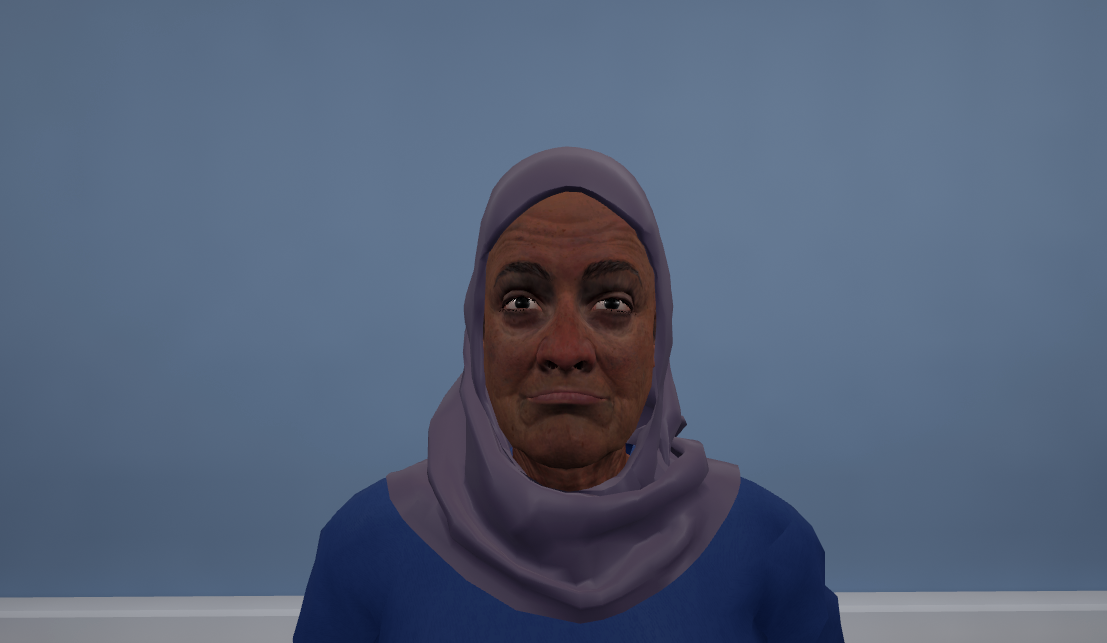
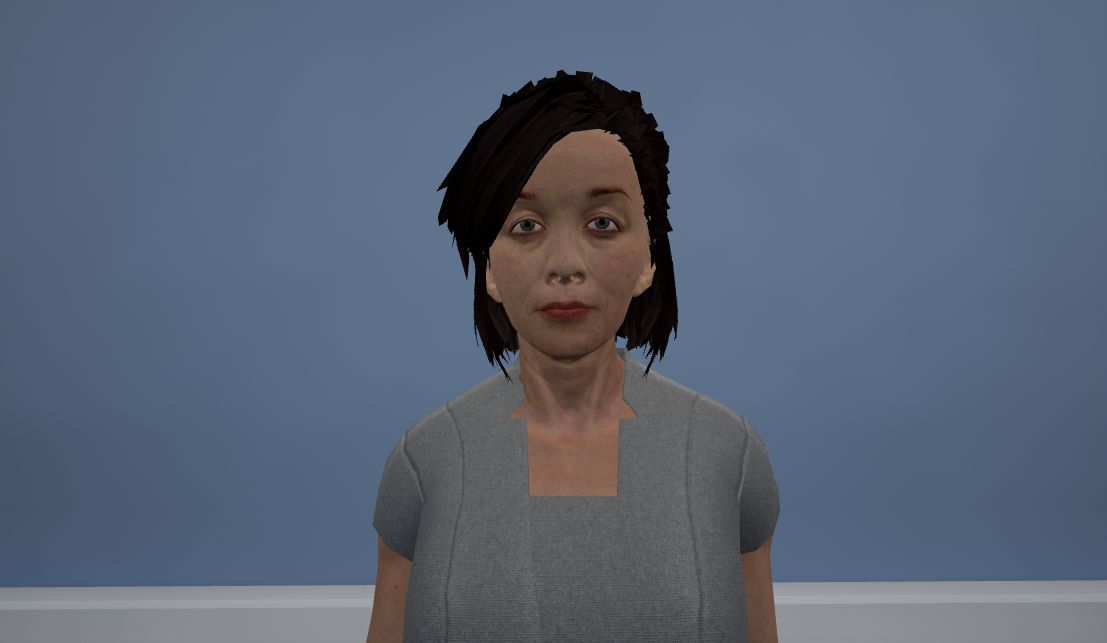
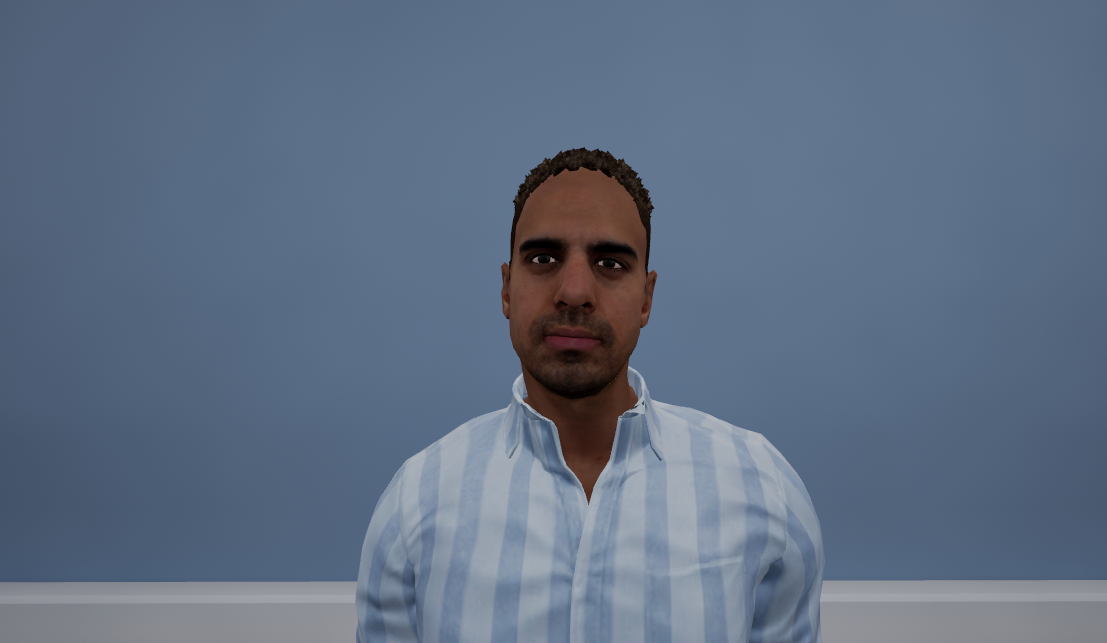
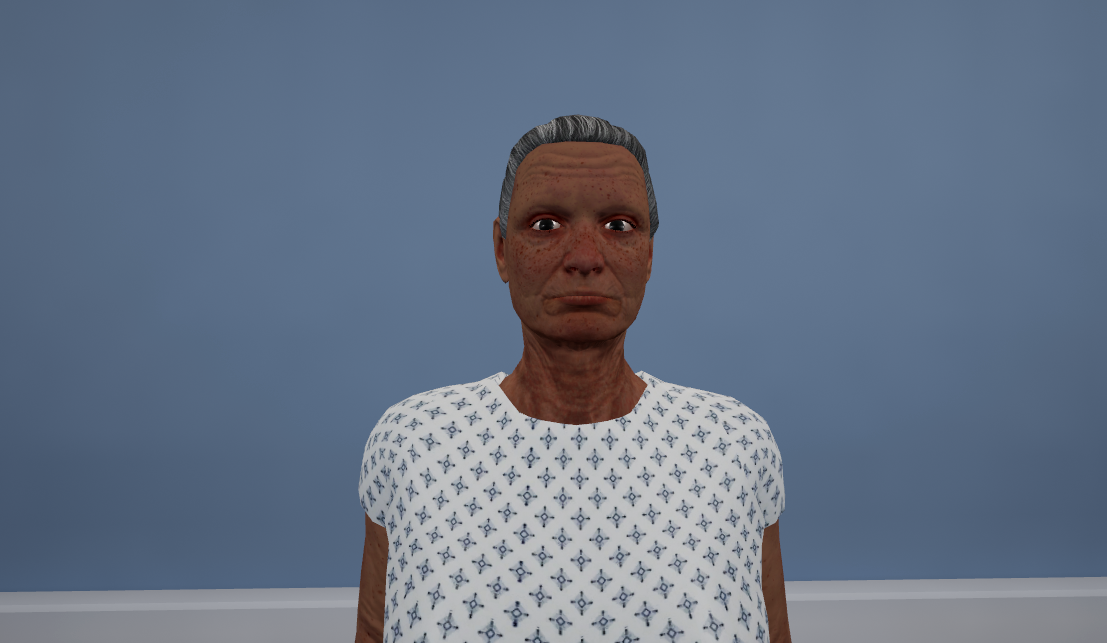
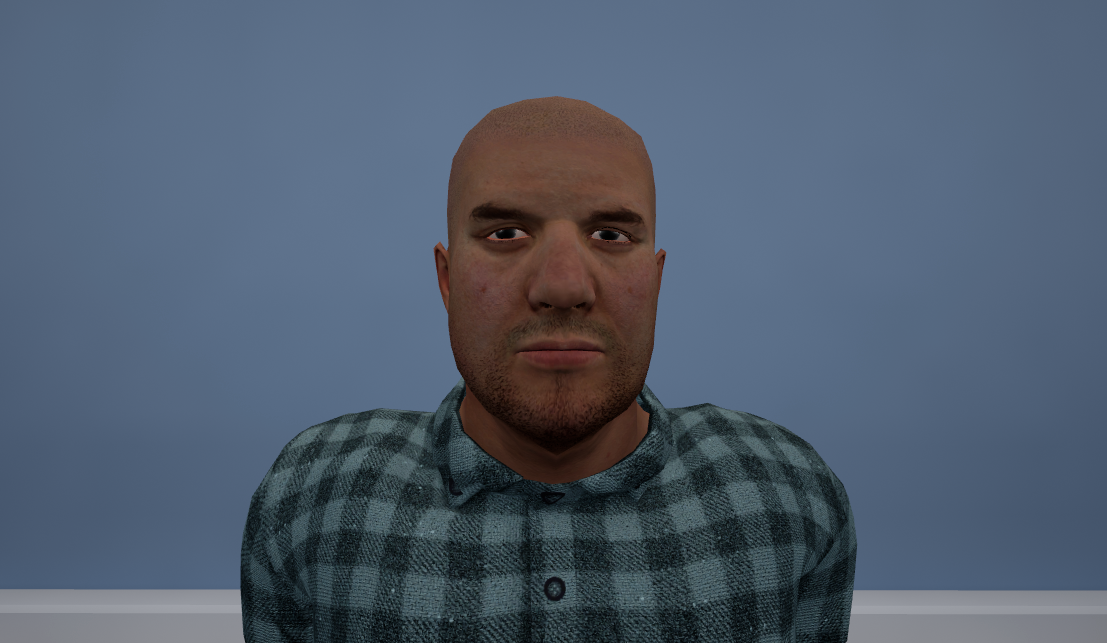
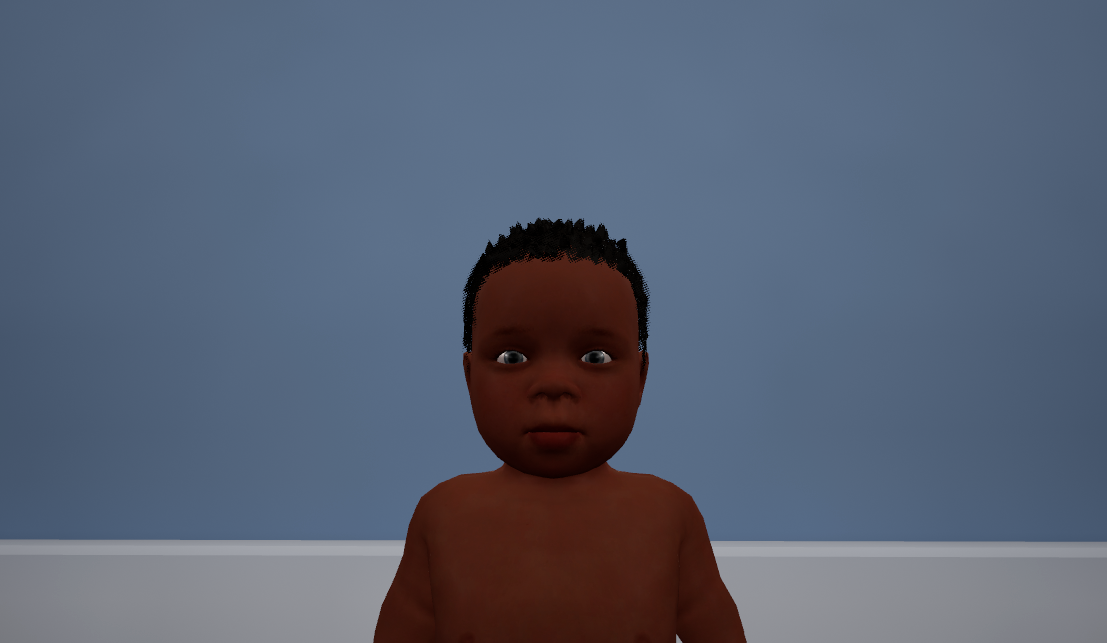
A sample of the AI patient characters available in InvolveXR. Hover to meet each one.
At West Virginia School of Osteopathic Medicine, students using InvolveXR described virtual pediatric cases as valuable preparation for exactly this reason: they had to think about how they would communicate with both the child and the parent. Learners also reported exposure to a greater diversity of virtual patients than they typically encountered in their local training environment.
For nursing programs, this means diversity can become something educators intentionally design into the curriculum rather than something they hope students encounter.
6. Use simulation to expand clinical learning capacity
There are only so many clinical placements.
That constraint becomes more painful as nursing programs try to grow enrollment while hospitals manage their own staffing pressures and capacity.
Multimodal simulation offers another source of structured experiential learning.
The important word is structured. Giving students a headset is not a clinical education strategy. Programs can instead map virtual experiences against specific competencies and use them before, between and after clinical rotations.
A student might complete a screen-based patient assessment independently, move into an immersive scenario requiring clinical decision-making, and later participate in an instructor-led team simulation and debrief.
Research increasingly supports virtual simulation as a legitimate complement to traditional modalities. A 2024 meta-analysis of 27 randomized controlled trials involving 1,480 participants found no significant overall differences between virtual simulations and mannequins or real-person simulations across several measured competencies, while noting the flexibility virtual simulation offers around time and space. The authors also cautioned that results vary by competency and design, reinforcing the case for blended rather than wholesale replacement approaches.
The opportunity isn’t fewer clinical experiences. It is more purposeful experiential learning around them.
7. Build a pathway, not another technology silo
Perhaps the most interesting use of immersive learning is also the least flashy.
Don’t make VR day a special event.
Instead, build a learning pathway.
The student completes a screen-based case independently, practicing assessment and clinical reasoning before ever setting foot in the lab.
That progression reflects how expertise is actually built: exposure, practice, feedback, application and repetition.
It is also the central promise of multimodal simulation. The screen, headset, mannequin, standardized patient and clinical placement don’t need to compete for a place in the curriculum. Each can do what it does best.
For nursing programs, that may be the bigger transformation.
The question is no longer, “Where can we fit VR into the curriculum?”
It is: “Where do our students need more practice, more exposure or more confidence than our current model can give them?”
Start there.
Then choose the modality that makes the most sense.