
NBCC Expanded Clinical Hours With VR Simulation
At New Brunswick Community College, a shortage of pediatric clinical placements forced nursing educators to rethink a longstanding assumption about healthcare training: that meaningful clinical experience could only happen inside hospitals.
This spring, the college launched an ambitious pediatric simulation initiative using Lumeto’s InvolveXR platform, combining virtual reality and screen-based immersive learning to deliver clinical education at scale for 46 nursing students across multiple campuses.
The challenge facing NBCC is one confronting nursing programs across Canada and the United States. Clinical placements are becoming harder to secure as hospitals manage staffing shortages, rising patient complexity, and growing numbers of nursing students entering programs each year. Pediatric placements are especially limited.
For many NBCC students, completing pediatric rotations traditionally meant traveling to Halifax, Nova Scotia. But limited availability made that model increasingly difficult to sustain.
“We needed a solution that could scale while still giving students meaningful practice,” one instructor explained during a recent discussion about the pilot program.
What emerged was a multi-modal simulation week that blended VR scenarios, screen-based immersive activities, assessments, and documentation exercises alongside their existing mannequin-based simulation. Together, these modalities created a coordinated clinical learning experience that allowed students to practice across different environments while staying connected to the same learning objectives.
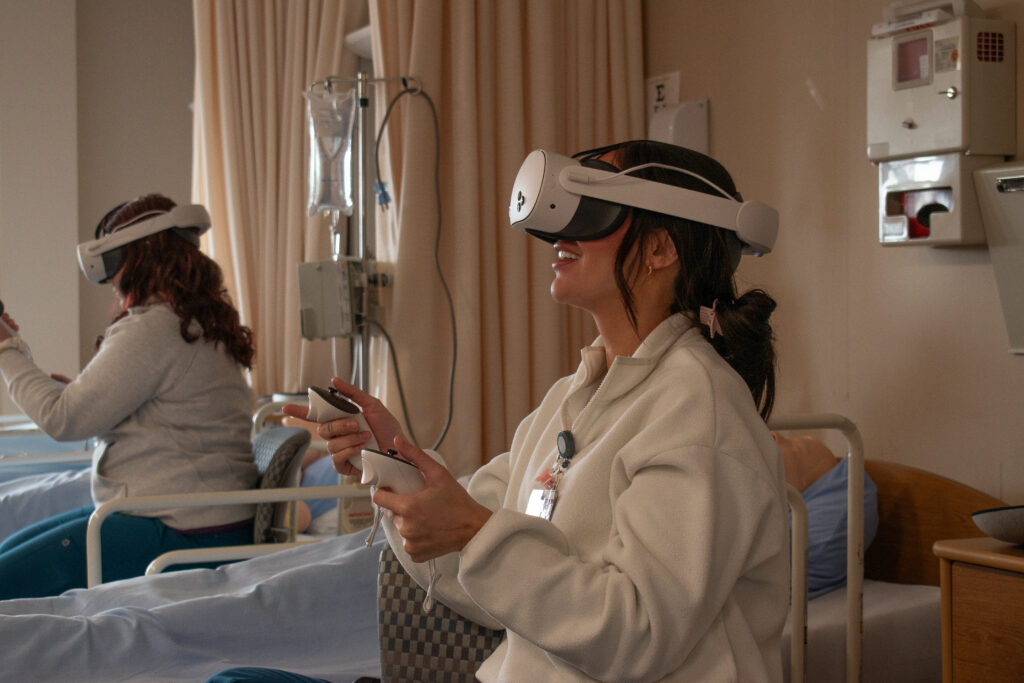
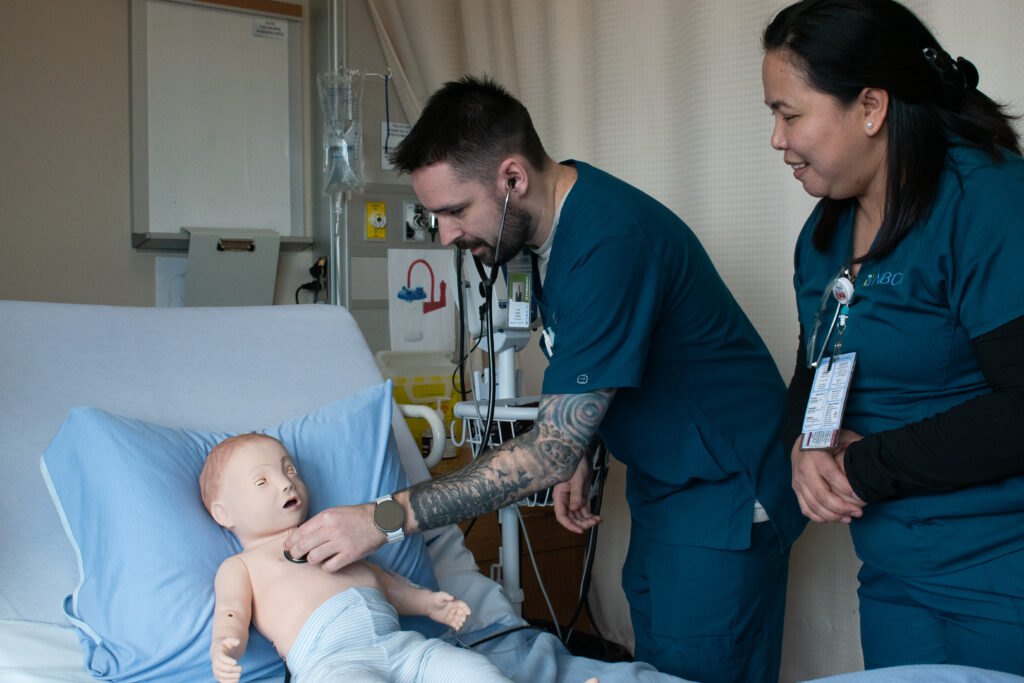
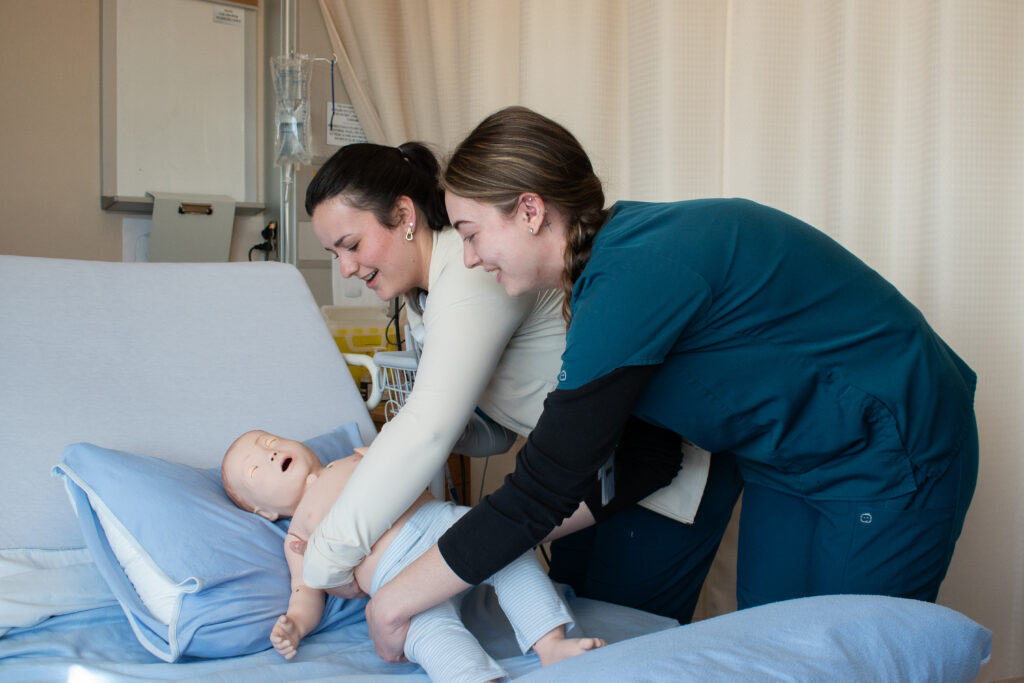
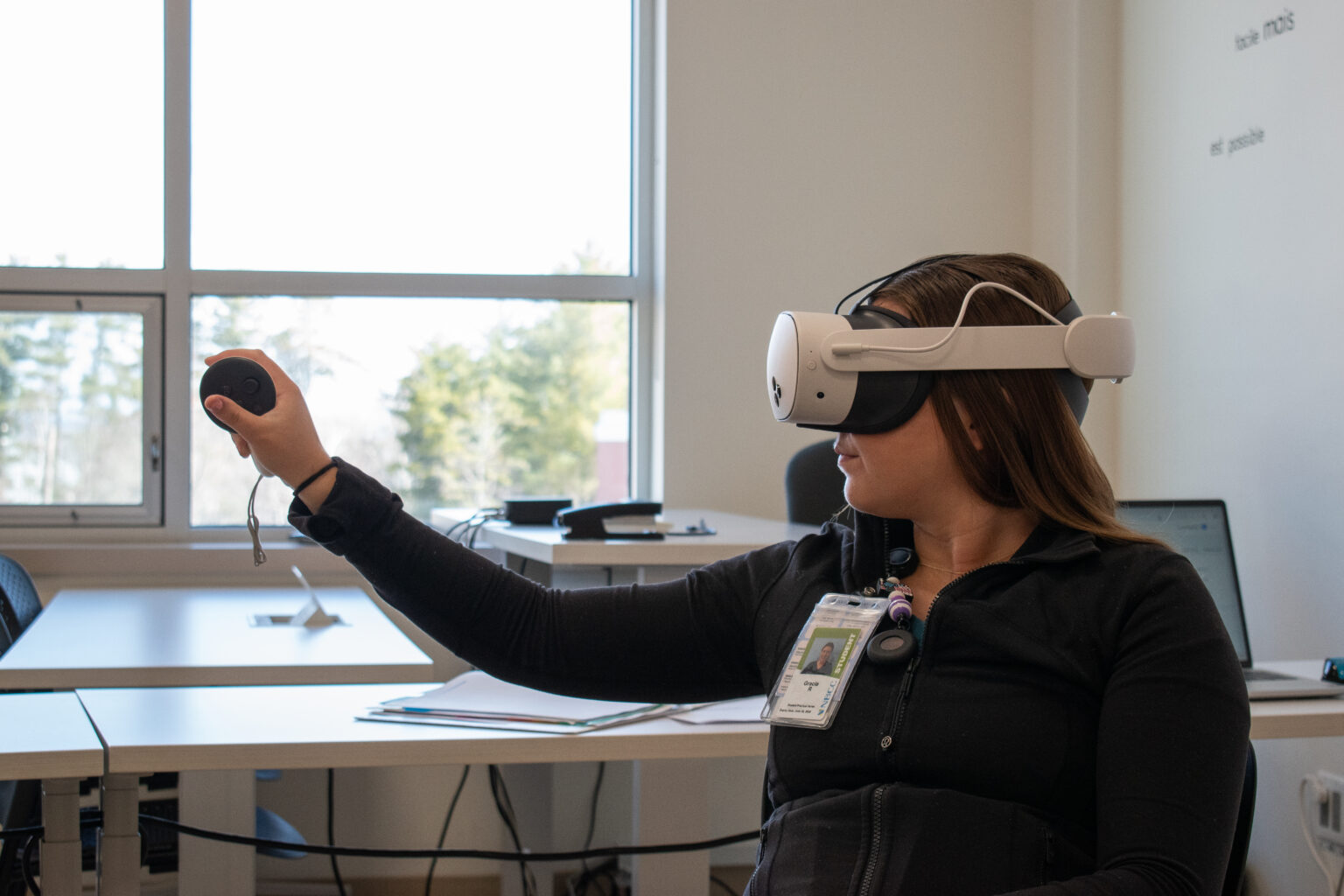
Using InvolveXR, students moved between fully immersive VR pediatric simulations and screen-based learning environments that allowed for flexible participation, repeat practice, and independent progression. The combination proved critical.
VR gave students the feeling of presence and realism that comes with interacting inside a clinical environment. Students practiced pediatric immunizations, communication, safety procedures, and assessments in immersive patient encounters that replicated the pressures of real clinical care.
At the same time, screen-based immersive learning allowed the college to broaden access and increase throughput without requiring every learner to be inside a headset at the same moment.
Together, the two modes created something educators say would have been difficult to achieve using only one format alone: scale.
The program divided 46 students into rotating cohorts across multiple days. While some learners completed VR activities, others engaged in screen-based simulations and supporting exercises. The structure allowed instructors to keep students continuously engaged while maximizing the number of learners who could participate simultaneously.
For institutions struggling with placement bottlenecks, that operational flexibility matters as much as the technology itself.
“This wasn’t just about innovation,” one faculty member noted. “It was about capacity.”
The initiative ultimately enabled students to complete 22 hours of simulation activity that counted toward clinical requirements, helping offset limited pediatric placement opportunities.
Students responded with overwhelming enthusiasm.
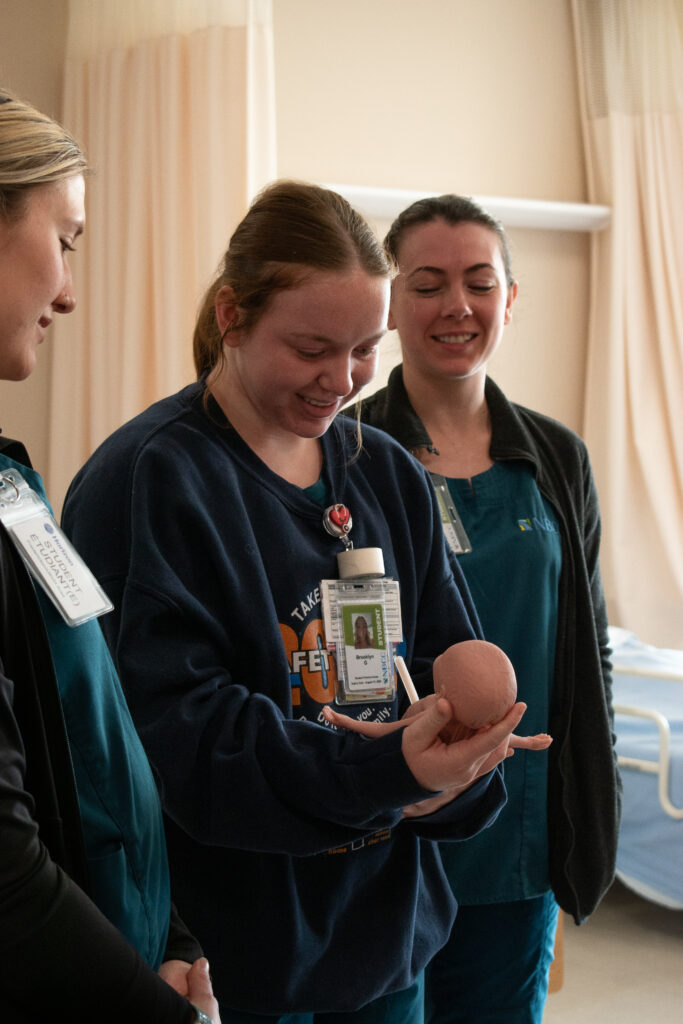
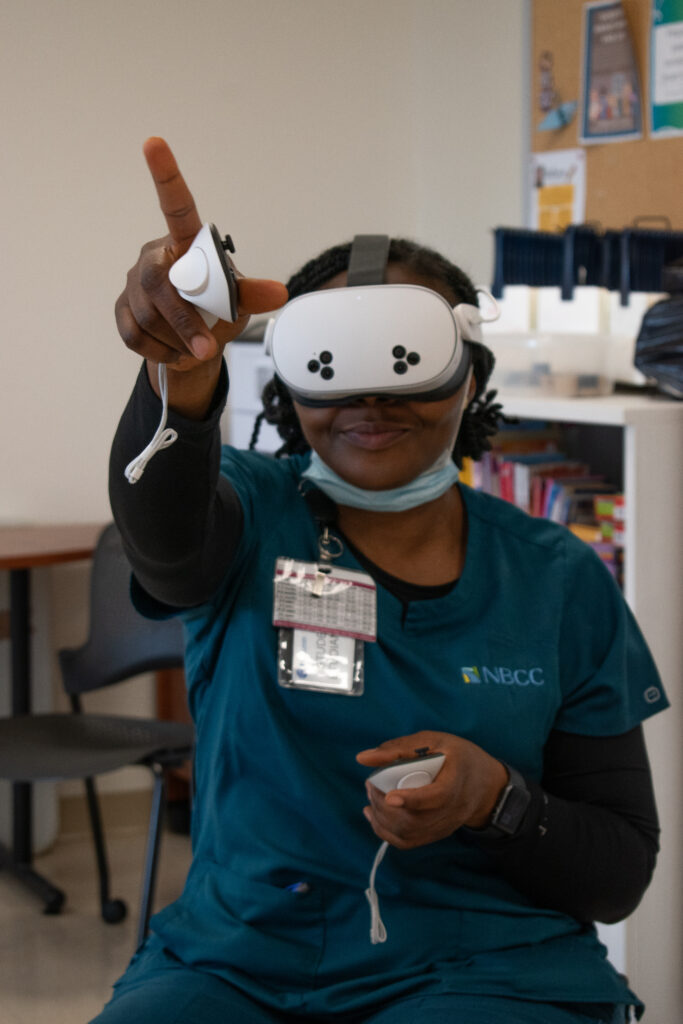
Many described the immersive simulations as safer and less intimidating than traditional labs, where classmates often role-play as patients. Inside the virtual environment, learners could practice difficult conversations, identify abnormal findings, and repeat assessments without fear of judgment.
The ability to revisit scenarios repeatedly became one of the platform’s greatest advantages.
Instructors structured assessments into focused modules including neurological, respiratory, and cardiac evaluations. Students practiced independently until proficiency improved. Some learners who initially struggled dramatically increased their performance scores after multiple attempts.
That kind of repetition is difficult to guarantee in live clinical settings, where student exposure depends heavily on patient availability and time constraints.
The rollout was not without challenges.
Many students had never used VR headsets before, requiring faculty to spend significant time on onboarding and orientation. Instructors quickly learned that introducing immersive technology earlier in nursing education could improve confidence before students reached advanced clinical training.
The team also adapted the physical learning environment to reduce simulator discomfort. Students used stationary chairs instead of swivel seating, kept their feet grounded during sessions, and received coaching to minimize feelings of vertigo or nausea.
Those adjustments helped even hesitant learners complete the simulations successfully.
NBCC educators say the experience also changed how they think about instruction itself.
In traditional nursing labs, instructors often guide students step-by-step through assessments. Inside immersive environments, faculty members found themselves shifting into more supportive and observational roles while students practiced independently.
That balance between instructor guidance and self-directed learning became especially important in VR sessions, where too many simultaneous verbal interactions could become distracting. Educators remained physically present to coach and troubleshoot while allowing students to move through scenarios at their own pace.
The success of the pediatric simulation initiative has already sparked interest in expanding immersive learning into additional areas, including maternity, mental health, wound care, catheterization, and training for internationally educated nurses.
For NBCC, the pilot reinforced something many healthcare educators are beginning to recognize: immersive learning is no longer just an experimental supplement to clinical education.
In an era of shrinking placement availability and growing workforce demand, it is becoming part of the infrastructure needed to train the next generation of nurses.
And increasingly, the ability to combine VR and screen-based immersive learning within a single platform may be what makes that infrastructure scalable.
For programs considering a similar approach, here’s the pediatric simulation schedule NBCC ran with InvolveXR.

NBCC's Pediatric Simulation Week Schedule

NBCC Fredericton — April 13–17, 2026
| Time | Group 1 | Group 2 | Group 3 |
|---|---|---|---|
| 9:00 – 10:00 | Orientation (A 2022) *Practice with Headsets* | ||
| 10:00 – 11:00 | VR #1 – Large Lab (Shelby) | Documentation / Game Activity – A-2022 (Sara) | Screen-based – Small Lab (Sarah) |
| Break – 15 mins | |||
| 11:15 – 12:15 | VR #2 – A-2013 (Penny) | VR #1 Large Lab (Shelby) | Documentation / Game Activity – A-2022 (Sarah) |
| Lunch – 1hr 15 mins | |||
| 13:30 – 14:30 | Documentation / Game Activity – A-2022 (Shelby) | Screen-based – A- Small Lab (Sarah) | VR #2 – A-2013 (Penny) |
| 14:30 – 15:30 | Debrief – Sarah A 2022 | Debrief – Sarah A 2022 | Debrief – Sarah A 2022 |
| Time | Group 1 | Group 2 | Group 3 |
|---|---|---|---|
| 9:00 – 9:30 | Study Time *Practice CPNRE* – A-2022 (Penny) | Study Time *Practice CPNRE* – A-2022 Penny | Study Time *Practice CPNRE* – A-2022 Penny |
| 9:30 – 10:30 | In person simulation with pediatric Hal – Small lab (Sara) | VR #2 – A-2013 (Penny) | VR #1 Large Lab (Shelby) |
| Break – 20 mins | |||
| 10:50 – 11:50 | Screen-based – A-2022 (Penny/Shelby) | In person simulation with pediatric Hal – Small lab (Sara) | Time to finish Evaluations/feedback A-2013 (Penny/Shelby) |
| 11:50 – 12:50 | Time to finish Evaluations/Feedback A-2013 (Penny/Shelby) | Time to finish Evaluations/feedback A-2013 (Penny/Shelby) | In person simulation with pediatric Hal – Small lab (Sara) |
| Time | Group 1 | Group 2 | Group 3 |
|---|---|---|---|
| 9:00 – 10:00 | Orientation (A 2022) *Practice with Headsets* | ||
| 10:00 – 11:00 | In person simulation with pediatric Hal – small lab (Sara) | VR #2 – A-2013 (Penny) | Screen-based – A-2022 (Sarah) |
| Break – 15 mins | |||
| 11:15 – 12:15 | Screen-based – A-2022 (Sarah) | VR #1 Large Lab (Shelby) | In person simulation with pediatric Hal – Small lab (Sara) |
| Lunch – 1hr 15 mins | |||
| 13:30 – 14:30 | VR #2 – A-2013 (Penny) | In person simulation with pediatric Hal – Small lab (Sara) | VR #1 Large Lab (Shelby) |
| 14:30 – 15:30 | Documentation / Game Activity – A-2022 (Penny) | Screen-based – Small lab (Sarah) | Documentation / Game Activity – A-2022 (Penny) |
| Time | Group 1 | Group 2 | Group 3 |
|---|---|---|---|
| 9:00 – 9:30 | Study Time *Practice CPNRE* – A-2022 (Penny) | Study Time *Practice CPNRE* – A-2022 (Penny) | Study Time *Practice CPNRE* – A-2022 (Penny) |
| 9:30 – 10:30 | Time to finish Evaluations/Feedback A-2022 (Penny/Shelby) | Documentation / Game Activity – A-2022 (Penny) | Debrief Small lab (Sarah) |
| Break – 20 mins | |||
| 10:50 – 11:50 | VR #1 Large Lab (Shelby) | Debrief Small lab (Sarah) | Time to finish Evaluations/feedback A-2022 (Penny) |
| 11:50 – 12:50 | Debrief (Sarah) Small lab | Time to finish Evaluations/feedback A-2022 (Shelby) | VR #2 – A-2013 (Penny) |
Monday, April 13, 2026 — Groups 1–3
|
Time
|
Group 1
|
Group 2
|
Group 3
|
|---|---|---|---|
Tuesday, April 14, 2026 — Groups 1–3
|
Time
|
Group 1
|
Group 2
|
Group 3
|
|---|---|---|---|
Thursday April 16, 2026 — Groups 4–6
|
Time
|
Group 1
|
Group 2
|
Group 3
|
|---|---|---|---|
Friday, April 17, 2026 — Groups 4–6
|
Time
|
Group 1
|
Group 2
|
Group 3
|
|---|---|---|---|